Showing posts with label Led Zeppelin. Show all posts

Monday, August 13, 2012

Hindenburg

The Hindenburg over Boston, a year before the crash.

I’ve long been fascinated with the Hindenburg crash. Not sure why. I suspect that there are a number of factors that come into play. 

Yes, there’s the iconic association with my favorite rock band of all time, but there’s also my interest in history. Then there’s the relevance of the locale. The airship crashed about 25 miles from where I grew up and, I recently learned, it also routinely flew over my adopted home of Boston and eastern Massachusetts during its 17 Atlantic crossings prior to incendiary ends at the Naval Air Station in Lakehurst, N.J. 

Perhaps most of all, though, it may be the archetypal nature of the story, one of man stretching his mastery of the universe only to be humbled by the ultimate authority of nature (in this case in the form of static electricity).

Anyway, the point of all this is The Atlantic recently published a fascinating collection of a few dozen photos in tribute to the 75th anniversary of the Zeppelin’s disastrous end in May 1937.


Tuesday, November 8, 2011

LZ IV Is 40!


Can you believe that Led Zeppelin’s landmark fourth LP was released 40 years ago today?

On Nov. 8, 1971, the band issued its fourth album in three years and, in so doing, let loose what is arguably the greatest single-disc rock record of all time. Few titles so merit the label “iconic,” particularly in terms of 1970s-era rock.

And this album does rock, but it does so much more, too. The famously untitled collection – commonly referred to as Led Zeppelin IV or ZoSo, for lack of a better way to articulate the unpronounceable symbols and runes depicted on the album’s inner sleeve and on the disc label itself (the actual outer cover was devoid of any words, no band name, album title, record company or anything) – is an absolute masterpiece. Not so much for its stunning musicianship (though that is considerably impressive), but primarily for the inspired songcraft and production, which remains a benchmark to this day. Even 40 years later, despite the obvious nostalgic associations, this record sounds astoundingly fresh. (If you haven’t heard it in a while, dig it out and listen to it again – on a good sound system, from start to finish — and you’ll agree.)

Name another album that in 42 minutes and a mere eight songs covers such varied sonic terrain with as much passion, bravado and craftsmanship. Think about those eight songs, not to mention the sum of those parts:

The dynamic sonic slabs and start-and-stop riff and rhythm of the opener, “Black Dog,” pretty much set the bar for the 1970s, though barely a foot over the threshold. The Little Richard-esque riffing of the classic “Rock and Roll” provides the back end of the formidable one-two punch of the opening before the band reverses direction with the trad English folk music and soaring, majestic vocal interplay of Robert Plant and Sandy Denny (guesting from Fairport Convention) on “The Battle of Evermore.”

Meanwhile, the catchy, psych-pop-riffrock of “Misty Mountain Hop” and the modern, worldly, impressionistic strains of the alt-tuned and double-baton driven “Four Sticks” that kick off Side Two may have been considered the “throwaway” tunes on the set back in the day, but both songs have aged remarkably well – with the former now maintaining a popular place in the band’s lofty canon.

Things get mellow again on one of the perennial favorites among the band’s acoustic forays: the Joni Mitchell-inspired, Laurel-Canyon-meets-Welsh-mountainside vibe of “Going to California.” The heady smoke fades from the fingerpicking for the final combustion of a radioactive take on Memphis Minnie’s classic, “When the Levee Breaks,” a powerful reminder of the bone-crushing blues the band specialized in, featuring the greatest (and most sampled!) drum sound ever recorded and some chilling blues harp floating atop the pulsing guitar and bass.

Oh, yeah, and there’s that “Stairway” song, too.


It’s hard to appreciate now, but the minimalism of this ad — at the tale end of the hippie era, with its heady, busy designs — was fairly unprecedented. The band was very effective at creating buzz by acting in ways that were seemingly anti-hype.


A Few Interesting Facts:
• The album has now sold 37 million copies worldwide.
• Robert Plant bought the 19th-century rustic oil painting featured on the front cover at an antique shop in Reading, England.
• The 20th-century urban housing block featured on the back of the front gatefold cover is Butterfield Court in Eves Hill, Dudley, England. (I recall hearing a while ago that it has since been demolished.)
• The inside gatefold cover features the Hermit of the Tarot card deck atop a mountain overlooking a walled town with a lone pilgrim in the lower left making his ascent.

* NOTE: The version of the gatefold front cover featured at the top of this post is a later version in which Atlantic Records reasserted their authority over the band (temporarily) and insisted that reference to the record company and the copyright be added.


Thursday, July 7, 2011

Last Gasp

Thanks to my handy “This Day in Led Zeppelin” iPhone app, I’m reminded that today is the 31st anniversary of the last concert the band ever performed – just under 3 months before Bonzo died. Oh, what might’ve been, then again ... as far as the legacy and legend goes, maybe it was for the best. God knows, The Who would’ve been better off had they called it a day.


The mighty Zep finished their final performance at Eissporthalle in West Berlin with a 17-minute version of “Whole Lotta Love.”


Saturday, December 25, 2010

The 32 Best Opening Tracks of All Time

OK, I admit it. I’m beginning to get tapped out. I know, hard to believe with a music obsessive like me, but it’s the truth. I’ve done as many “Father Knows Best” Box Sets of CD collections for my teenage daughter as I can think of without completely forcing the concept simply for the concept’s sake, rather than the music’s sake. (Best Foreign Language Rock Songs, anyone?)

So this year, rather than the usual collection of 10 personally selected CDs nestled under the umbrella of some arbitrary theme – Best Debut Albums, Best Live Albums, Most Underrated Albums – I’m delivering my now 15-year-old music-loving daughter one CD (OK, it’s a double CD) highlighting the 32 “Best Opening Tracks of All Time.”

What makes a great opening track? Well, obviously, it must grab you right away. There has to be a dramatic sense of lift off. And it sets the tone for the rest of the album. Some first tracks might be great songs – “Like a Rolling Stone,” “Achilles Last Stand” and “Where the Streets Have No Name” come to mind – but that doesn’t quite make them the best opening tracks. Those are a tune of a different color.

Some bands are particularly adept when it comes to opening tracks, consistently delivering in ways that few others can match. In my catalog of favorites, that would be The Rolling Stones and Led Zeppelin. (Bob Dylan doesn’t do too badly either.)

Think about it. Every Led Zeppelin album except Presence began with a monster opening track – featuring some of the heaviest guitar riffs, drum fills and wailing vocals in rock history. (Ironically, Zep’s one opening misfire was “Achilles Last Stand,” quite possibly the band’s best song ever in my book, but not necessarily a great opening track.) Then there’s The Rolling Stones: “Sympathy for the Devil,” “Gimme Shelter,” “Brown Sugar,” “Rocks Off,” “It’s Only Rock and Roll,” “Miss You” and “Start Me Up” … What more proof do you need?

Of course, the whole concept of a great opening track is predicated on the idea of an album as a specifically sequenced series of songs: something that is quickly fading from public perception – except, perhaps, among us older folks – if not artistic consciousness. Nevertheless, once upon a time that meant something; and how albums began and ended was an important consideration (as was even how side two started in the pre-CD vinyl era).

So here is my “Best Opening Tracks of All Time” playlist:

• “Whole Lotta Love” – II, Led Zeppelin – The greatest rock riff of all time – OK, in close competition with “Satisfaction” and “Jumpin’ Jack Flash” – paired with the greatest lead guitar break, drum fill and vocal orgasm ever. Res ipsa loquitur.

• “Gimme Shelter” – Let It Bleed, The Rolling Stones – The definition of “classic.” Totally anchored in the late ’60s, yet somehow still contemporary. Pulsing rhythm, menacingly intercedent lead guitar, wailing blues harp and killer background vocals … All that and one of the best maracas parts this side of Santana!

• “London Calling” – London Calling, The Clash – Talk about kicking off an album with jaunty swagger! One of the great classics from the second generation of English rock musicians. Sounds as good today as it did in 1979.

• “Dead Leaves and the Dirty Ground” – De Stilj, The White Stripes – Raw force blasts out of the speakers like a slowed down Stooges giving way to an edgy, but understated, melody before bursting back into the ripping chords of the chorus. Proof you don’t need more than simple drums, simple guitar, sincere singing, a good arrangement and crisp recording. Great use of dynamics. Sounds loud at any volume.

• “Lively Up Yourself” – Natty Dread, Bob Marley and The Wailers – The song that first bridged the rock-reggae genre and turned all the Brits on to reggae (Jagger/Richards, Clapton, Page, Parker, et al really took this to heart). The Live version is better, but it doesn’t kick off that album.

• “Subterranean Homesick Blues” – Bringing It All Back Home, Bob Dylan – Right from the start, this song announced a “new Dylan.” The young troubadour was turning on, turning it up and channeling the spirit of Kerouac and Ginsburg, rather than Woody Guthrie. This song embraces the 1960s’ counter-culture while conjuring twisted images of the old-timey Midwest. “You don’t need a weatherman to know which way the wind blows.”

• “Planet Telex” – The Bends, Radiohead – One of the first great “post-modern” album tracks. Supremely original, yet still referential. The sound of the future arriving. This album, and the next one (OK Computer), would make Radiohead the biggest band in the word for awhile – until they decided, “Enough of that!”

• “Baba O’Riley” – Who’s Next, The Who – The most famous synthesizer riff of all time sets up that classic, crashing entrance of three chords (you know, the ones that tell the truth). So much more than “teenage wasteland” … though that still resonates in many ways, too. A great start to one of the best sounding Who albums (thank you, Glyn Johns).

• “Rocks Off” – Exile on Main Street, The Rolling Stones – This song doesn’t quite fit the criteria for great opening track the way most of the others on this list do. On the surface, it’s a straightforward mid-tempo rocker, but buoyant subtleties in vocals and instrumentation make it more than just another sprightly Stones song. The result is a perfect start to one of the band’s best albums. Great horns by Bobby Keys, and Nicky Hopkins’s piano jousts with Keith’s chords as the song gallops along. Some tasty Mick Taylor guitar licks buried in the mix, too.

• “Suite: Judy Blue Eyes” – Crosby, Stills, Nash, Crosby, Stills, Nash – It’s not easy for a predominantly acoustic song to make this list, but this is what had people seriously calling CSN “the American Beatles” for a short while in 1969-1970. Despite the acoustic feel, there is some perfectly understated electric guitar, too. Then, of course, there’s the ever-present, incomparable vocal harmonies. This song is the apex of Stephen Stills’ artistic accomplishments, and a fully developed template for what CSN would be as a band.

• “Break On Through (To the Other Side)” – The Doors, The Doors – Another great riff that kick starts an album and sets the tone for all that follows. Urgent, with a hint of reckless abandon. It’s easy to focus on the guitar riffs and the organ rhythms, but it’s Densmore’s drumming that makes the track what it is. Interestingly, Morrison’s vocals are rather unremarkable on this one.

• “Immigrant Song” – III, Led Zeppelin – Viking plunder meets hippie consciousness. That opening vocal wail, the funky shuffling drums and the leaden bass/guitar riff yield the sound of the “Hammer of the Gods.” Quite a start to the band’s … ahem … “acoustic” album. Ironically, this is the only Zep song with no guitar solo!

• “World Shut Your Mouth” – Saint Julian, Julian Cope – Edgy 1980s’ pop at its best since The Clash’s pop dabblings. Radio friendly, but retaining some spunk. Great production, too. Sonically, kind of an English forerunner to Cracker in some ways, now that I think about it. The peak of Cope’s career, really – representing a small window of lucidity between acid casualty and eco-earth-mother-archdrude nutcase.

• “Smells Like Teen Spirit” – Nevermind, Nirvana – I have to admit, I was never as smitten with Nirvana as many of my peers and those slightly younger seemed to be. Nevertheless, it’s undeniable that the slackers from Seattle did popularize a noteworthy new coalescence of influences in the form of “grunge.” And “Here we are, entertain us,” does pretty much speak to the attitude of a generation. Yet, ultimately, “Well, whatever, nevermind,” really says it all.

• “Come Together” – Abbey Road, The Beatles – Lennon cops some Chuck Berry lyrics and pairs them with some funky organ riffs and alternately shimmering and piercing guitar fills. One of the best return-to-basics tunes of the mature Beatles’ career. Nice double-tracking on the lead vocals, too. The rest of Abbey Road followed the tone established on this one.

• “Fisherman’s Blues” – Fisherman’s Blues, The Waterboys – Another of the rare acoustic numbers to make this list. Carried by exuberant Celtic fiddle and dream-filled vocals, this song is simplicity perfected (musically and lyrically), punctuated by a spirited delivery. Not just the namesake for the album, but a grand announcement that The Waterboys were serious about their stay in Ireland. The beginning of a lush and fruitful idea, indeed.

• “Trenchtown Rock” – Live!, Bob Marley and the Wailers – One the greatest starts to a live album ever. Though rather than kicking out the jams right from the get go, this stays true to reggae form and eases into the spirit of things, gently setting the mood with a understated rhythm and laid-back melody. “One good thing about music, when it hits you feel no pain. So hit me with music. Hit me with music now.” … Words to live by.

• “Don’t Bang the Drum” – This Is the Sea, The Waterboys – The last album airing “the big music” that The Waterboys built their early career on – before heading to the craggy terrain of Western Ireland and embracing the Celtic twilight. Roddy Lorimer’s opening trumpet solo provides a unique anticipatory lull before the band kicks into an epic sounding, mid-tempo rocker about “deliverance, or history, under these skies so blue.” Anto Thistlethwaite’s sax joins the trumpet, distorted guitars, keyboards, drums and Mike Scott’s hoots and Dylanesque chants for the clamorous climax: “Just let it come, don’t bang the drum!”

And kicking off Disc 2:

• “In a Big Country” – The Crossing, Big Country – Unfairly pigeon-holed as a band of plaid-wearing Scotsmen with bagpipe-sounding guitars at the dawn of the MTV-era, Big Country was nothing short of a great band for a few albums. This first song on their debut album set the stage. Yes, there were guitars with bagpipe-like effects, but plenty of others, too. And paired with Mark Brezecki’s huge drum sound and Tony Butler’s funky bass, there was something more sophisticated and emotive in this song than the stereotype suggests. Big Country were masters at interweaving ancestral melodies with modern pop-rock sounds, subtle-yet-spirited instrumentation and Stuart Adamson’s atavistic romanticism.

• “Rough Boys” – Empty Glass, Pete Townshend – To this day, Empty Glass remains, to me, Townshend’s best solo album. In fact, this far surpassed what The Who were doing by this point (1980). I think Pete knew that, too. Sophisticated songwriting and arrangements – just as you’d expect from Townshend: nuanced and ripping at the same time. Sounds like he’s worked up some ire not heard since he’d venomously written: “Who the fuck are you?”

• “I Will Follow” – Boy, U2 ­– Like many lead tracks on great debut albums, this was an announcement of arrival, an auspicious start, yet one that now sounds quaint. As dated as it is, that ringing E string and the tinkling triangle remain uniquely engaging. There is a reason that this induced early ’80s’ pop audiences to frenetic pogoing.

• “Shot of Love” – Shot of Love, Bob Dylan – Apocalyptic and pleading, this was the fading echo of Dylan’s gospel period. But it’s also a great, funky, pseudo-gospelesque rocker that has the old bard spitting lyrics like he did at the height of the ’60s. He’s propelled along by Clydie King’s impassioned vocals and Fred Tackett’s rocking guitar.

• “Young Man Blues” – Live at Leeds, The Who – Not the start of the live concert from which it was taken, but the perfect start for the live E.P. that really helped The Who establish sound footing for their career in the U.S. Great as he was, Mose Allison (the song’s composer) never envisioned this!

• “Search and Destroy” – Raw Power, Iggy and the Stooges – Raw power, indeed! Wholly defined by the line, “I’m a street-walking cheetah with a heart full of nepalm.” It’s the quintessential counterpoint to the peace-and-love side of the equation in 1969. The bridge between Eddie Cochran, The Ramones and The Sex Pistols if there ever was one.

• “Finest Worksong” – Document, R.E.M. ­– A somewhat forgotten dose of R.E.M.’s early forays into harder rock, but this song and the album it leads off remain among my favorites by the boho’s from Athens. I played the grooves off this L.P. back in 1987 (and later the zeroes and ones out of the CD version). “What we want and what we need, has been confused” … and it often still is.

• “Wait for the Black Out” – The Black Album, The Damned – A powerful song, despite the now muffled sounding recording (or maybe it’s my hearing that is now muffled). This was the midpoint between the thrashing guitar and pounding drums of the seminal punk band’s early days and their later ultra pop ventures (before they concluded as a heavy metal band, of course). As such, it’s the perfect balance between musicality, unabated energy and something to say — with the boots on to make sure the point comes through loud and clear! The same goes for this entire album, which (recording issues aside) remains very listenable even today. And it leaves no doubt as to why Jimmy Page sought out Rat Scabies to play drums with him shortly after this was released.

• “Teen Angst (What the World Needs Now)” – Cracker Brand, Cracker ­– A catchy, classically rocking track, for sure, but it’s David Lowery’s clever lyrics that make this the keeper it is. No mere sardonic novelty though, the attitude and humor of this song are whipped along perfectly by guitarist Johnny Hickman’s raunchy melodies and clanging chords.

• “Brown Sugar” – Sticky Fingers, The Rolling Stones – What Keef can do with a five-string guitar is more poignant and groovy than most guitarists can do with 12 strings, much less six! This is one of Jagger’s best vocal performances ever (a lot of multi-tracking going on here). And, as is so often the case during this period, Bobby Keys’ sax is fast on the heels of the Human Riff.

• “Debaser” – Doolittle, The Pixies – A perfect example of the Boston band’s twisted take on punky pop rock. Propelled by Kim Deal’s heavy bottom end (bass, that is), Joey Santiago’s fluid lead guitar melodies glide in, out and around Black Francis’ choppy chords and manic vocals.

• “Black Dog” – IV, Led Zeppelin – Those first few seconds of understated guitar scratching are like an engine revving up before the full onslaught of Robert Plant’s a cappella verse vocal and the quintessential hard rock guitar/bass riff. A great performance and production that makes for a powerful start to an incredibly varied album that is also quite possibly the best rock album of all time.

• “Zoo Station” – Achtung Baby, U2 – The stark, steady snare, clanging toms and swirling synthesizer bracing against The Edge’s chiming guitar and Bono’s heavily effected vocals declared that the Irish quartet would be wielding a new sonic palette in the new decade of the 1990s. And indeed they did.

• “Low” – Kerosene Hat, Cracker – Simply a great rock song. One of the true highlights of this band’s long career. Strongly strummed acoustic guitar provides the ground floor, upon which are layered classic rock guitars and cinematic vocals. This is a model of how to do the whole verse/chorus dynamic, not to mention instrumental bridge.

That’s my list … at least for now. There’s another dozen or so songs that nearly made it. What would be on yours?


Saturday, September 25, 2010

Bonzo’s Legacy Lives On


It was 30 years ago today that the rock world, and an admittedly fanatic teenage music lover (me), was stunned to hear of the sudden death of Led Zeppelin drummer John Bonham. It was a tragic and rather pathetic end for the man (having choked to death on his own vomit after an all-day drinking binge). It happened around what were supposed to be rehearsals for the band’s triumphant return to North America following a three year absence and the tragic death of singer Robert Plant’s 5-year-old son that had nearly ended the group’s glorious run. Overnight, Bonzo’s death snuffed out the light of the dominant rock band of the 1970s.

Though clearly shaken, yet persevering through radically changing times in the music business, Led Zeppelin was showing signs of reinvigoration and optimism about the prospect of rebirth and resurgence in the new decade. Nevertheless, despite the band’s successful string of streamlined shows throughout Europe during the summer of 1980, beneath the facade there were still some signs of trouble, notably Bonham’s and guitarist Jimmy Page’s ongoing drug addictions.

I distinctly remember hearing the news of Bonzo’s death on that fateful Thursday at the end of September 1980. It was late morning and, being in boarding school at the time, I was walking down the hallway of my dormitory, passing a classmate’s open door. A radio was on inside (rather loudly, as was the norm). The voice of a Philadelphia rock station’s D.J. drifted out into the hall and I caught the words: “... dead of Led Zeppelin.”

I stopped in my tracks and listened for more details. “Who?!” my mind raced. But it was the end of the bulletin and no more information was forthcoming. I bolted down the hallway to my own room and turned on my stereo and frantically scanned the dial for other news reports. (There was no internet providing real-time updates on breaking news in those days. Hell, there were no personal computers!) It wasn’t long before I got the full story, such as it was. Details were scant other than that the drummer had been found dead at Page’s home and an autopsy was being performed to determine the cause of death.

Even then, I had little doubt that, unlike other bands, the death of any member would mean the end of Led Zeppelin. I was gravely disappointed at the realization that I would never get to see my favorite band play live – tickets for fall shows in Chicago were already on sale and dates were planned for Philly. But I was also reassured by the belief that the band would not compromise their ideal and taint their legacy by carrying on in some lesser form – which, without Bonham, it would inevitably be. And I’m glad that to this day they (more or less) have stayed true to the declaration that they “could not continue as we were” that came that December.

While Bonzo’s untimely passing abruptly ended Led Zeppelin, his reputation and stature as a rock drummer have only accrued interest over the years. There’s no doubt that his contributions to the band’s sound and success are more appreciated today than during the group’s heyday.

And while we must admit that if even a portion of the many sordid accounts of the road antics on Zeppelin tours during the late 1960s and early ’70 are to be believed, the guy was clearly a bad drunk capable of not only being obnoxious, but outright abusive to those who might be unfortunate enough to cross his path. That said, his intimates (bandmates and friends alike) have remained quick to pay tribute to the Dr. Jekyll side of Bonham’s persona: The loyal friend, loving family man and, ultimately, insecure performer.

Personality flaws aside, his legacy is based on what he did as a musician. His spirit lives on in the tracks. Forget the lengthy drum solos. Those were de rigeur at the time, and Bonzo’s was more impressive as a visual spectacle in concert (and a much needed respite for his bandmates) than as a demonstration of superlative technique. It was in the rest of Led Zeppelin’s catalog that John Henry Bonham’s vitality, taste and technique really shined.

The drum lessons embedded in the Zep canon range from bombastic bashing to subtle nuance and touch; in other words, it was all about feel. As Robert Plant has aptly stated, Bonzo was Zep’s secret ingredient. “He put the sex in the grooves,” Plant says. And, if you have any appreciation for James Brown, you’ll know exactly what he means.

So, in honor of the 30th anniversary of Bonzo’s passing, here are my 30 favorite Led Zeppelin drum tracks. With the exception of the unparalleled powerful drum sound captured on Led Zeppelin IV’s “When the Levee Breaks,” it’s likely that even more impressive examples of Bonham’s talent could be culled from the hundreds of live Zeppelin bootlegs floating around out there. (For example, give a listen to “The Song Remains the Same” from the L.A. Forum in 1977.) But to avoid sounding like a Deadhead, I’ve confined this list to the readily accessible studio recordings:

1. When the Levee Breaks (LZ IV) – Undoubtedly the most sampled drum beat of all time. Thanks to the sharp snap of Bonzo’s wrists and Page’s production wizardry, this drum sound is unsurpassed!
2. Achilles Last Stand (Presence) – Nothing short of epic. In fact, every song on Presence has incredible drumming (it being Zep’s funkiest album overall), but this is the pinnacle – almost prog rock!
3. In My Time of Dying (Physical Graffiti) – Along with his fellow bandmates, Bonham took blues into another dimension on this song.
4. Rock and Roll (LZ IV) – Bonzo started out playing the intro to a Little Richard song and it took off from there.
5. The Wanton Song (Physical Graffiti)
6. How Many More Times (LZ I) – The climax of the band’s debut album, this left no doubt that here was a new force to be reckoned with.
7. For Your Life (Presence)
8. Fool in the Rain (In Through the Out Door) – Yes, he could even do samba.
9. Good Times Bad Times (LZ I) – For the high-hat and tom-tom work alone. This was an arrival announced!
10. Poor Tom (Coda – outtake from LZ III sessions) – Proof that even on an acoustic blues track drums can rock.
11. Trampled Under Foot (Physical Graffiti) – The bass, clavinet and electric guitar ride Bonzo’s relentless groove with joyful abandon: Simple funk perfection.
12. The Ocean (Houses of the Holy) – Crisp, sure-shotted drum sound, plus the added bonus of Bonham’s vocal intro.
13. Whole Lotta Love (LZ II) – That quintessential guitar riff and the lead break just wouldn’t be the same without Bonzo’s beat.
14. We’re Gonna Groove (Coda – outtake from LZ II sessions) – Zep opened many 1970 shows with this Ben E. King tune.
15. Walter’s Walk (Coda – from the Houses of the Holy sessions)
16. Kashmir (Physical Graffiti)
17. D’yer Mak’er (Houses of the Holy) – Reggae meets ’50’s doo-wop with Bonzo’s crisp pounding holding it all together.
18. Bring It On Home (LZ II) – For the fast part of the song.
19. The Rover (Physical Graffiti)
20. Four Sticks (LZ IV) – Legend has it Bonzo struggled with the drum track on this tune until he angrily grabbed two drum sticks in each hand and banged it out: Hence the title.
21. Royal Orleans (Presence)
22. Hots on For Nowhere (Presence) – The drums mirror the guitar in a unique and fanciful dance.
23. Candy Store Rock (Presence)
24. Out on the Tiles (LZ III)
25. Dazed and Confused (LZ I)
26. Down by the Seaside (Physical Graffiti)
27. Sick Again (Physical Graffiti)
28. Tea for One (Presence) – Even on an understated slow blues, Bonzo played just what was needed, no more. He didn’t need more than a cymbal and a snare.
29. Moby Dick (LZ II) – Not the bloated 25 minute live version, but the succinct studio version, especially for the fills around the opening and closing guitar riff.
30. Bonzo’s Montreaux (Coda – between album studio experimentation) – Yes, it’s a drum solo, too, but the harmonizer’s effects on the steel drums give it some melody. When released years later it almost sounded like new wave art rock!


Thursday, September 23, 2010

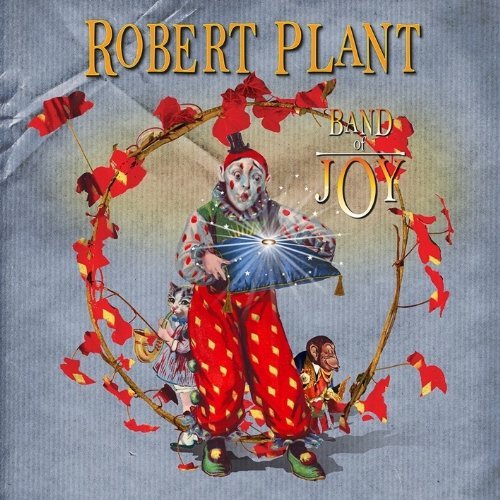
New Plant Yields Various Joys

With his new release, Band of Joy, Robert Plant continues to avoid the obvious and the temptation to resurrect the Golden Godness of his Zeppelin days. Instead, he again explores more esoteric and, ultimately, satisfying music far from the well-worn path of the tired old nostalgia trip.

Early in the decade, he made some wonderful music with The Strange Sensation, bringing West African and Arabic nuances to rock riffs and vocals coupled with the occasional heartfelt homage to some of the folk songs that inspired him long before he and his mighty Zep bandmates trod the globe like wanton Vikings. He followed that with his Grammy-gobbling collaboration with Alison Krauss and T-Bone Burnett. This year’s Band of Joy release, borrowing its name (though no songs or members from one of Plant’s pre-Zep outfits), doesn’t quite measure up to the alchemical wonder of 2007’s Raising Sand collaboration, but it’s pretty darn close and is, in many ways, a step further in Plant’s always interesting, if often musically meandering, sojourn.

Band of Joy, Plant’s 10th solo LP (depending on how you count ’em) does visit some of the same places as Raising Sand (i.e., strong female vocal accompaniment, this time by Patty Griffin – in more of a supportive role than the outright duets featuring Krauss, but noteworthy nonetheless) and lots of haunting reverb and minor key chords and melodies. But it also strays into quite different areas. There’s the occasional hint of North African memories in the rhythms, and once or twice it even sounds like the band is flashing back to Page & Plant’s under-rated 1998 Walking Into Clarksdale release.

Great drums paired with masterful guitar work from respected Nashville session man and Raising Sand tour veteran Buddy Miller color the whole affair and ably bolster Plant’s mostly restrained vocal performance. There’s nothing too flamboyant in the guitar playing, but there are killer atmospherics that create moods perfectly in synch with the singer’s distinctive voice.

Like Raising Sand, this is another album that even people who don’t like Robert Plant’s singing may well like. It’s full of good, often catchy songs (mostly well-chosen covers of somewhat unfamiliar songs by the likes of Low, Los Lobos, Richard Thompson, Townes Van Zandt and others) that vary in pace and tone, yet fit together remarkably well. Despite the diverse composer credits, with superb musicianship and production (spare, open, airy) throughout, the album still seems “of a piece.” Dare I say it, it should have wide crossover appeal.

The range and quality of music on this album is exemplified by the fact that my three favorite songs (at least at this early date) are radically different from one another in style and tone. The opening track, Los Lobos’ “Angel Dance,” is a jaunty, upbeat drum and mandolin-driven song that marries Arabic rhythms and country folk melodies with urgent vocals and pulsating electric guitar. While “The Only Sound That Matters” is a mellower, plaintively romantic tune carried by Plant’s vocal and Darrell Scott’s impeccable pedal steel guitar playing. And, finally, my favorite track of all, “Monkey” is a darkly haunting tune with guitars evoking the more recent sound of The Church (that is, the under-appreciated Aussie band, not the crew from Rome). It’s one of two compositions on the album by the Minnesota slowcore band Low, and one on which both Griffin and Miller really shine.

Griffin, while no Alison Krauss on many levels, nevertheless adds to the haunting undercurrent that runs through much of this album. She manifests a faint, wispy, ghost-like presence on some songs that gets amplified to full-frontal haunt on other tracks. Krauss comes across as a naive innocent compared Griffin’s sultry earthiness.

While Band of Joy expands upon the unique fusion of country, folk, rock, blues and bluegrass that was mined and polished in the Krauss collaboration, the heavier country emphasis of that release is not wholly abandoned here. A few touches of the Nashville recording environs seep through: In the banjo meets field-holler blues of “Central Two-O-Nine” (the album’s only original composition); and the subtly humorous “Cindy, I’ll Mary You Someday,” on which Miller’s clean, reverbed electric guitar lurks eerily behind the banjo licks before ramping up to a rollicking end reminiscent of Zep’s “Gallows Pole.” Then there’s Townes Van Zandt’s “Harm’s Swift Way,” the most Raising Sand-reminiscent song on the record, with Griffin and Plant sharing the catchy “Oh me, Oh my, who’s gonna mark my time?” refrain.

Other notable cuts among the album’s dozen tracks include the dreamy “Silver Rider,” with understated, gradually building guitars reminiscent of some of the mellower latter-day U2 material. (Interestingly, the same might be said of the conclusion of “Harm’s Swift Way,” too.) Less surprisingly, there’s also the near-rockabilly of “You Can’t Buy My Love” and the quasi-doo-wop of “Falling in Love Again,” which finds Plant crooning like he hasn’t since his nostalgic turn with The Honeydrippers in the early ’80s.

Beyond the satisfying collection of songs itself, bonus points to Plant for designing the colorful and intriguing cover art himself. That’s a first for him, I believe. Further evidence that even at 62, he’s still very into exploring new avenues of creativity.

Plant and his current joyous band did a brief tour previewing the new album, mostly through the South, this past summer. I’m looking forward to the opportunity to see a much-anticipated, but yet-to-be announced, second leg tour stop in New England.

POSTSCRIPT: I was thinking about posting the official video to “Angel Dance” along wit this review, but it’s a mediocre video (despite the thematic nod to composers Los Lobos’ Latino heritage). Moreover, the sonically muted sound of YouTube really doesn’t do justice to the dynamic sound of the song as heard on CD. I hold out hope that, if commercially successful enough, maybe they’ll do a better video for “Monkey,” but I'll still listen to the CD for the sound.


Thursday, February 25, 2010

35 Years Gone


This week marks the 35th anniversary of the release of Led Zeppelin’s most comprehensive studio album, the double-disc Physical Graffiti.

For those of us who are serious fans of rock music, and more specifically fans of the music of Led Zeppelin, there is not much debate about which studio album stands above all others in the band's catalog. While Led Zeppelin I provides the template for the group in one succinct, yet impressively varied statement, and Led Zeppelin IV represents an enduring pinnacle of several aspects of the band’s work (straight out rock, Celtic folk, suped-up blues and the amalgamation of all that and more), it is the band’s 1975 release, Physical Graffiti that supercedes all others – if only for that fact that, as their only double studio album, it contains twice the original music of any of the other seven studio releases. And, in so doing, it most fully captures the breadth of the band’s stylistic undertakings. Not only does it contain one of the mighty Zep’s preeminent epics (No. 1 if you ask Robert Plant) in the exotic Arabian tones of “Kashmir,” it also features the whole swath of the band’s oeuvre: hard rock, melodic rock, blues, funk, pop, country, folk and even barrelhouse boogie.

Comprising an album and a half of new tracks (written and recorded in 1974), coupled with a few leftover gems from the previous three albums, Physical Graffiti was the first release on the band’s own label, Swan Song Records. Such was their sway over the record industry – and parent company Atlantic Records, in particular – that they could present their latest collection of songs in an extravagant package featuring the now-familiar St. Mark’s Place, N.Y.C., facade with its remarkable die-cut cover revealing interchangeable sleeve images.

The production of the music itself remains a sonic standard many artists still strive to capture to this day. Its crisp freshness is remarkable. And it’s all the more amazing considering that much of it was recorded organically with mobile recording trucks camped out at various English country locales (Mick Jagger’s Stargroves estate and the former country workhouse Headley Grange).

As a guitar hobbyist myself, I’ve discovered over the years another telling aspect of the quality of the compositions on Physical Graffiti: even many of the multi-layered electric songs translate well to acoustic interpretations (e.g., “Houses of the Holy,” “Custard Pie” and “The Rover”). The songs hold up no matter how they’re rendered.

I could go on and on, but suffice to say that after 30+ years of listening to this record, I appreciate its nuances, craftsmanship, variety and overall “feel” more than ever. Long-time Zeppelin chronicler Dave Lewis waxes far more eloquently about it than I ever could in his lengthy “Tight But Loose” blog post on the topic. He delves deep into the backstory of the recording sessions for the album evidenced by some of the bootlegs that have emerged over the years. (I’ve heard many of these and they are both fascinating and revealing – especially if you’re a musical obsessive like me!) It’s very clear that Zeppelin were ahead of their time in so many ways – in the moment, yet always looking back, sideways and forward. That is part of what has made them a band with a legacy matched only by The Beatles.

In early 1975, Led Zeppelin was at the top of their game. Supremely capable and confident, in full control of their fortunes and facilities. Yet, unbeknownst at the time, they were also mere months away from the beginning of a string of misfortunes, drug-induced debilitation and ensuing decline that would mar their later years, before finally finishing off the band with Bonham’s death some five years later. But, in February 1975 there was joy in the tracks, and it’s still to be found there:

• Custard Pie – This jaunty kickoff to the album features a funky bass line, bubbly clavinet and cutting wah-wahed lead guitar while referencing a number of early blues songs. Quintessential mid-seventies rock decadence. Save me a slice.

• The Rover – One the band’s best and most-underrated songs proves that hard rock can have subtlety, nuance and a beautiful melody. This richly textured masterpiece was developed from an idea conceived during the sessions for the previous album (Houses of the Holy). It features some of Plant’s better lyrics and some of Jimmy Page’s most lyrical lead guitar work.

• In My Time of Dying – A brutal slide guitar-and-drum-driven assault on an old blues standard (Blind Willie Johnson, 1927). Listen to Dylan’s nascent version of this tune on his eponymous 1961 debut L.P. and then listen to this. John Bonham is monstrous and the band plays with the precision of a fine-tuned machine careening around on its own accord!

• Houses of the Holy – The title track from the previous release that didn’t make the album! Pure joyous pop rock in Zeppelin’s oft-imitated but never matched style.

• Trampled Under Foot – The band’s first serious foray into funk (some more of that to be heard on their next studio LP, Presence). This must’ve given the Red Hot Chili Peppers something to think about. In addition to Page’s searing wah-wah guitar, John Paul Jones absolutely rules in providing the funk on clavinet. With none-too-shrouded lyrical analogies between automotive engines and carnal endeavors (a la Robert Johnson’s 1936 chestnut “Terraplane Blues”), it’s easy to see why this became a concert favorite for the band.

• Kashmir – The sands of the Sahara seep out of the speakers on this epic. Inspired by Page and Plant’s Moroccan adventures (even though Kashmir is in Southeast Asia). Features Page’s self-proclaimed C.I.A. (Celtic, Indian, Arabic) tuned guitars provide the Moorish flavoring complemented by Bonzo’s steady percussive power. As majestic a rock track as there ever was.

• In the Light – Another epic, building track, this time highlighting Jones’ spacey synthesizer drones. Despite being pigeon-holed as the forbearers of heavy metal (or in another couple of years “dinosaur rock”), here’s evidence of their modernity – not prog, but future-looking and sounding. It still sounds modern.

• Bron-Yr-Aur – This beautiful, short acoustic guitar interlude harkens back to the feel and geographic inspirations of Led Zeppelin III.

• Down By the Seaside – Originally written during the LZ III composing period in the Welsh mountains, this countryfied tune starts out with languid pedal steel guitar and a hippie-ish pro-environmental message, and then cranks up to a full-tilt boogie bridge before relaxing back into a country lilt for the conclusion.

• Ten Years Gone – A musically and lyrically sophisticated and slow-building composition featuring layer upon layer of cascading guitars. This is one of the prime examples of Page’s mastery of orchestrating guitar parts.

• Night Flight – The closest thing to a throwaway song on this impeccable L.P., this track was leftover from the LZ IV sessions. Nevertheless, this tale of Vietnam-era draft-dodging trips across the border to Canada is still a highly listenable pop workout.

• The Wanton Song – A very modernistic (sonically well ahead of its time) funky, riff-heavy, hard rocker that leaps out of the speakers and belts you in the chest ... and you love it! Deceptively sophisticated drum work by Bonzo, while Jones shines on both bass and organ and Page’s guitar zooms in like a meteorite.

• Boogie with Stu – This light-hearted jam leftover from the LZ IV sessions features the late, much-beloved, Rolling Stones’ keyboardist Ian Stewart joining the band for a barrelhouse piano-driven romp that references Richie Valens’ 1950s’ era pop rock. A great slapping snare drum sound from Bonham and Plant shines on this one, too.

• Black Country Woman – Straight British country-folk fun. With bluesy harmonica, acoustic guitars and mandolins front and center, it’s reminiscent of the band’s third album but actually hales from the Houses of the Holy sessions.

• Sick Again – The band wraps it up with a return to pure rock decadence in a debaucherous tale of groupiedom and life on the road. The guitars appropriately drip with sex on this one.

And that’s it: 83 minutes of musical journey and the starting point looks a thousand miles behind.

The famed facade: 96 St. Marks Place, Greenwich Village, N.Y.
Interestingly, this same locale was also later used by The Rolling Stones for their “Waiting on a Friend” video.